
Atlanta Metro · Fence Blog
Fence or No Fence: A Short History of the Georgia Fence
· Superior Fence & Rail of Atlanta
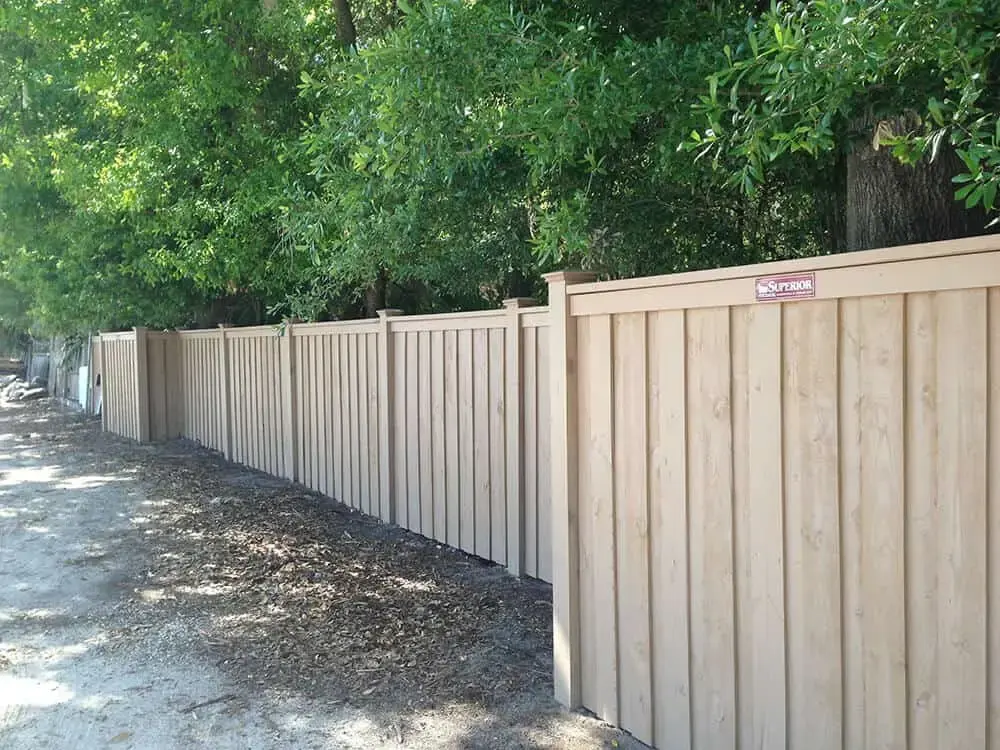
Today, a fence keeps things in. You put one up so the dog stays in the yard, the kids stay near the swing set, the pool stays behind a locked gate, and the neighbors stay on their side of the line. It feels obvious. It wasn’t always.
For most of Georgia’s history, a fence did the exact opposite job — and the question of who had to build one nearly split the state’s counties down the middle.
When the animals were free and the crops were fenced in
Through the 1800s, Georgia lived under what was called the open range. Livestock — cattle, and especially the lean, half-wild “razorback” hogs — roamed loose across woods, roads, and unclaimed land, fattening on whatever they could find. The animals weren’t trespassing. They were supposed to be out there.
Which meant the burden fell on the farmer. If you wanted a crop, you fenced it — not to keep your animals in, but to keep everyone else’s animals out. A cornfield without a good fence around it was just an open buffet.
So the Georgia farmer poured an enormous amount of labor into fence — not around the property line, but around every planted acre.
Horse-high, bull-strong, and pig-tight
The fences themselves were mostly split rail — the zig-zagging “worm” fences you still see in old photographs and at historic sites, stacked from split timber with no nails and no post holes. They devoured timber and time, but they were what the land and the tools allowed.
And the law was specific about what counted. To collect damages when a stray animal ruined your crop, your fence had to be a “lawful fence” — in the old, plain description, one that stood “horse-high, bull-strong, and pig-tight.” High enough a horse wouldn’t jump it, strong enough a bull couldn’t push through it, tight enough a pig couldn’t wriggle under it.
Building that, mile after mile, was punishing work — and plenty of fences didn’t measure up. One nineteenth-century account noted dryly that “a lawful fence is of rare occurrence in the older counties.” In other words: a good share of Georgia’s fences wouldn’t have held up in court.
”Fence or No Fence”: the vote that split Georgia
By the 1870s, a lot of Georgians had had enough of fencing their crops to protect them from their neighbors’ wandering hogs. A movement rose to flip the whole arrangement — to pass a “stock law” that would require livestock owners to fence their animals in, the way we’d recognize today.
It became one of the most divisive local issues of its time. Georgia passed a fence law in 1872, and over the decades that followed, the question got settled in the most Georgian way imaginable: county by county, at the ballot box. Voters turned out for “fence elections” and chose between “fence” — keep the old open range — and “no fence,” the stock law.
It pitted small farmers and herders who leaned on free range against larger landowners who wanted their fields left in peace. This was a real economic fight, not an abstract one. It was making the papers, too: on November 11, 1883, the Atlanta Constitution ran a piece titled simply “Fence or No Fence.” Some counties flipped fast. Others clung to the open range — in parts of Georgia, livestock kept its right to roam well into the twentieth century.
What changed — and what didn’t
Eventually the stock law won out, and the logic of the Georgia fence quietly turned inside out. The fence stopped being a wall around your crops to keep the world’s animals out, and became the line around your yard to keep your own life in — your dog, your kids, your pool, your privacy.
The materials changed even more than the purpose. The split-rail worm fence gave way to sawn wood fencing, and then to vinyl, aluminum, and chain link — fences that go up in a day, last for decades, and never need restacking after a storm. The old rail fence didn’t vanish, either; it just retired to the horse pastures and big lots of the outer metro, where a clean three- or four-board line still looks exactly right.
A few things, though, haven’t changed at all. Georgia’s red clay still swallows a fence post and heaves with every wet winter and dry summer — which is precisely why we still set every post in concrete, working around the same ground the worm-fence builders were wrestling with all that stacked timber. The heat and humidity still punish a fence. And the oldest idea of the bunch still holds: a good fence makes a good neighbor, and a clear line is worth building right.
The homeowner fencing a backyard in Suwanee or Marietta today is part of a very long local story — one that began with hogs in the woods and a cornfield that needed protecting. We just build the fence the other way around now.
Putting up a fence anywhere in metro Atlanta? We’d be glad to help you do it right — horse-high, bull-strong, pig-tight, and built for the next few decades. Call (770) 373-7081 or request a free on-site estimate.
Historical details drawn from period Georgia fence-and-stock-law records and academic studies of the closing of the Georgia open range (1870–1900), including the November 11, 1883 Atlanta Constitution article “Fence or No Fence.”